
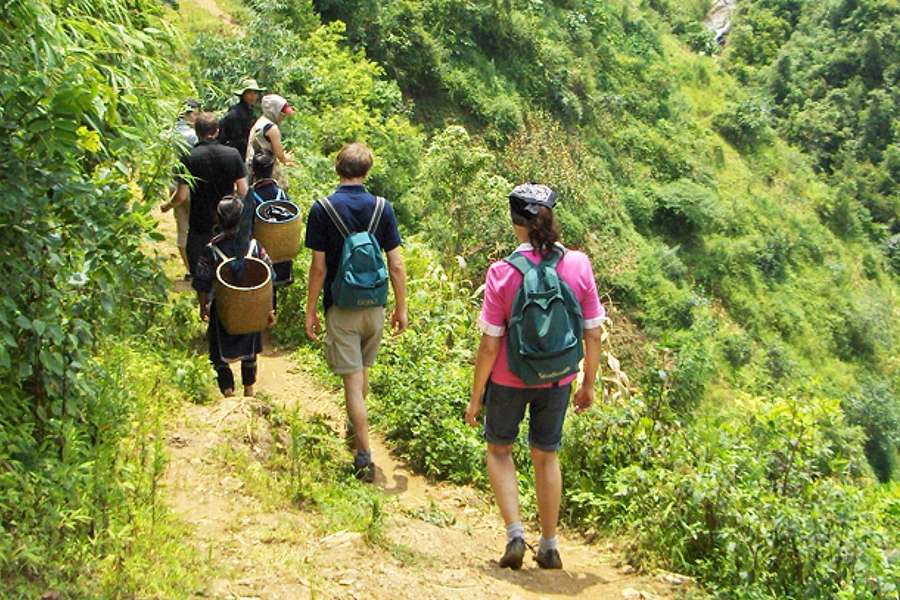
If you’ve been scrolling through travel feeds and keep seeing those misty rice terraces with winding mountain paths – that’s Sapa. And yes, it looks exactly like that in real life. Sometimes better.
Sapa trekking has become one of Vietnam’s most sought-after outdoor experiences, drawing thousands of international visitors every year to the Hoàng Liên Son mountain range in the northwest. But here’s the thing most blogs won’t tell you upfront: Sapa is not a “show up and wing it” destination. The weather is unpredictable, the trails can be slippery, and choosing the wrong route or the wrong season can turn a dream trip into a miserable one.
This guide is for first-timers. No fluff, no vague “it’s beautiful” platitudes – just practical, honest advice from people who’ve spent real time on these trails.
Why Sapa Trekking Is Worth It (And Who It’s Really For)
Let’s be clear: Sapa trekking is not hardcore mountaineering. Most popular routes are manageable for anyone with a reasonable level of fitness and the right footwear. You don’t need to be an athlete. You do need to be prepared.
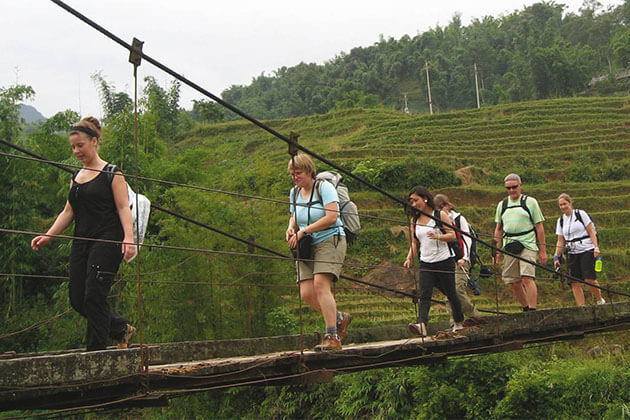
What makes trekking in Sapa Vietnam genuinely special is the combination of landscape and culture. You’re not just walking through rice fields – you’re passing through villages of the Black H’Mong, Red Dao, and Tay ethnic minorities, people who have farmed these slopes for centuries. When done respectfully and with a knowledgeable local guide, Sapa trekking offers a kind of cultural immersion that few destinations can match.
It’s ideal for:
- Couples or small groups who want something more active than a beach holiday
- Solo travelers looking for a structured adventure with manageable risk
- Families with older children (teenagers and above) who are reasonably fit
- Anyone curious about Vietnamese hill tribe culture and traditional life
It’s probably not ideal for: travelers with serious knee or joint issues, those with a fear of heights on narrow ridge paths, or anyone who hasn’t done any walking holiday before and expects flat terrain.
Best Time for Sapa Trekking
This is where a lot of first-timers get burned. Sapa trekking conditions vary dramatically across the year, and the “best time” depends on what you want to see.
September to November is widely considered the prime season. The rice terraces are at their most dramatic – golden yellow and ready for harvest – the skies are clearer, and trails are drier. This is when Sapa looks like the photos.
March to May is the second-best window. The weather is warming up, wildflowers are blooming across the hillsides, and crowds are lighter than peak season. Trails can still be muddy in spots after rain, but generally manageable.
December to February means cold. Sometimes very cold – sub-zero temperatures at higher elevations are not unusual. Fog and cloud cover can be persistent for days. That said, some travelers love the atmosphere of misty winter Sapa and it’s the quietest time of year. If you go in winter, pack like you mean it.
June to August is rainy season. Leeches on the trail, slippery paths, and reduced visibility are real issues. Not recommended for beginners doing Sapa trekking for the first time.
Sapa Trekking Routes: Choosing the Right One for Your Level
There are dozens of routes around Sapa, but for beginners, three main corridors are worth knowing:
1. Sapa Town to Cat Cat Village
Difficulty: Easy
Duration: 2–3 hours
Elevation change: Minimal
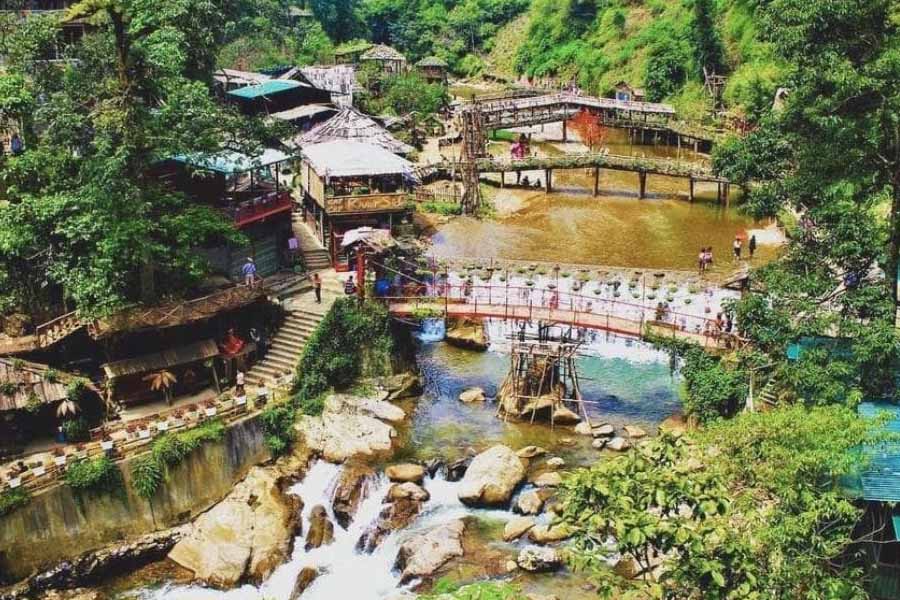
This is the gentlest introduction to Sapa trekking. The path descends from Sapa town into the Muong Hoa Valley to the Black H’Mong village of Cat Cat. Expect a well-maintained trail, some stone steps, and a small waterfall at the bottom. It’s touristy – there’s an entrance fee and a village market – but it’s a good warm-up route if you’ve never trekked before.
2. Sapa to Lao Chai and Ta Van Villages
Difficulty: Moderate
Duration: Full day (5–7 hours)
Elevation change: Moderate descent and return
This is the classic beginner-to-intermediate Sapa trekking route and for good reason. You trek through paddy fields along the Muong Hoa River valley, passing through two ethnic minority villages. The paths are narrow in places and can be very muddy after rain – proper footwear is not optional here. Homestay options in Ta Van are genuinely good; spending a night before returning adds real depth to the experience.

3. Sapa to Muong Hoa Valley (Full Circuit)
Difficulty: Moderate to Challenging
Duration: 2 days with overnight homestay
Elevation change: Significant
For beginners who consider themselves reasonably fit and want to push a bit further, this circuit takes in the full breadth of the Muong Hoa Valley – wider views, less foot traffic on the second day, and more authentic village interactions. This is the route where having a guide becomes genuinely important, not just convenient.
Do You Need a Guide for Sapa Trekking?
Honest answer: yes, especially on your first trip.
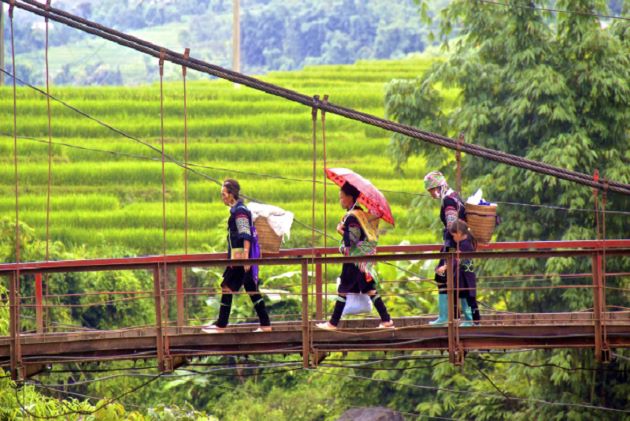
The trails around Sapa are not always well-marked. Paths split, conditions change, and mobile signal in the valley can be unreliable. Beyond navigation, a good local guide – often a woman from one of the H’Mong communities – provides cultural context that you simply cannot get from a guidebook. They know which families welcome visitors, which paths are safest after rain, and how to navigate the terrain at a pace that’s sustainable for trekkers who aren’t mountain-trained.
Some travelers try to self-guide using apps and end up fine. Others get turned around in fog or stuck in mud past their ankles. For Sapa trekking beginners specifically, the cost of a guide (typically $20–$40 USD per day for a reputable service) is genuinely worth it.
When booking, work with trusted vietnam local tour operators who vet their guides and can match the route to your actual fitness level – not just what you think your fitness level is. Avoid booking guides through aggressive touts at the bus station.
What to Pack for Sapa Trekking
Packing light matters, but packing wrong matters more. Here’s what actually gets used on the trail:
Footwear (most critical): Waterproof hiking boots with ankle support. Trail runners can work in dry conditions but offer no protection on muddy slopes. Do not trek in sneakers or sandals – this is the single most common mistake beginners make.
Layers: Even in warm months, temperatures drop fast as you gain elevation and stop moving. A lightweight fleece or softshell jacket packs small and earns its weight on every trip.
Rain gear: A packable rain poncho or jacket. Not a plastic bag. Not an umbrella on mountain paths.
Trekking poles: Optional but useful, especially on descents. Many tour operators can supply them.
Sun protection: At altitude, UV exposure is higher than you’d expect, even on overcast days. Sunscreen and a hat matter.
Small daypack essentials: 2 liters of water minimum, high-energy snacks (dried fruit, nuts), a basic first aid kit, your phone fully charged, and cash in small denominations for meals and village purchases.
Leave the heavy camera gear at the hotel if you can. Your phone is enough, and the lighter you are, the more you’ll enjoy the walk.
How to Get to Sapa
From Hanoi, Sapa is approximately 320 km northwest – about 5–6 hours by direct bus, or 8–9 hours by overnight train to Lao Cai followed by a 30-minute transfer to Sapa town. The overnight train is a legitimate experience in itself and arrives well-rested if you get a decent berth.
Most visitors doing Sapa trekking arrive via Hanoi, making it a natural add-on to a broader Vietnam itinerary. Budget 3–4 nights in Sapa to get meaningful time on the trails without feeling rushed.
Booking Your Sapa Trekking Trip
A few practical notes before you book:
Book accommodation in advance during September–October peak season – good guesthouses and homestays fill up weeks ahead. Mid-range options in Sapa town are genuinely comfortable; budget options are fine if you’re not fussy about hot water reliability.
For tour packages that combine Sapa trekking with the rest of your Vietnam itinerary, explore our Sapa tours for curated itineraries built around actual trail conditions and current access permits – not last year’s routes.
Tipping guides is customary and appreciated. VND 100,000–200,000 per person per day is a reasonable range for good service.
Final Thoughts
Sapa trekking rewards the prepared traveler. Get the timing right, choose a route that matches your actual fitness rather than your aspirational fitness, hire a guide, and wear proper boots. Do those four things and you’ll come back with trail memories that outlast any beach holiday.
It won’t always be easy. The paths are steeper than the photos suggest, the weather has opinions of its own, and your legs will know about it the next morning. That’s kind of the point.