
The first lesson in a pottery workshop is often how much an experienced maker can do with one small movement. The clay turns, the sides rise, and the shape holds. Then it is your turn. Even a simple bowl asks for more patience than it appeared to need.
If pottery making in Vietnam is on your travel wish list, the useful question is not just which village is famous? It is what will I actually do when I get there? One visit might involve shaping clay under an artisan’s guidance. Another may be a demonstration followed by time in a showroom. Both can be worthwhile, but they are different experiences.
At Vietnam Tour Biz, we build cultural stops into private itineraries, including Bat Trang on a family journey and Thanh Ha on a Hoi An day tour. This guide helps you choose a realistic workshop, ask the right questions before booking and leave enough room in your day to enjoy it.
What happens during a pottery workshop?
The word workshop covers several activities. When you enquire about pottery making in Vietnam, ask your organizer which of these is actually included:
- Watching an artisan: You observe the preparation, shaping or decorating process and learn why the local style looks the way it does.
- Shaping a piece: You try a wheel or a hand-building technique, depending on the village and the host. An artisan may help you rescue a lopsided first attempt.
- Decorating pottery: Some sessions focus on painting an item prepared earlier. That is an enjoyable creative activity, but it differs from forming a vessel from clay.
- Seeing the finishing stages: Drying, glazing and firing depend on the workshop. You may be able to observe part of the process without seeing your own piece completed.
This distinction matters if your children want to “make a pot” or if you hope to bring home the exact piece you created. Wet clay generally needs further work before it becomes a durable souvenir. For pottery making in Vietnam, confirm whether the item can be collected later, shipped, or left with the studio. Buying a finished piece directly from its maker is often the simplest choice on a short holiday.
Where can you try pottery making in Vietnam?
For most first-time visitors, Bat Trang and Thanh Ha are the easiest to fit into a standard itinerary. Bau Truc is valuable for a different reason: it introduces Chăm hand-building traditions if your route includes the south-central coast. The appropriate stop depends on your route, the age and interests of your party, and how much time you want with a maker.
| Place | Itinerary fit | Ask for this experience | Planning note |
|---|---|---|---|
| Bat Trang, near Hanoi | A Hanoi half-day or a northern family trip | A named studio, artisan demonstration and hands-on shaping or painting | Check exactly what the session includes and when a piece would be ready. |
| Thanh Ha, near Hoi An | A Hoi An day with time away from the old town | A working pottery stop and a confirmed chance to try the craft | A village visit alone does not guarantee a private lesson. |
| Bau Truc, near Phan Rang | A longer south-central itinerary | An artisan-led introduction to Chăm hand-building | Arrange participation in advance and approach it as a cultural meeting. |
These are options for pottery making in Vietnam, not three stops you need to collect in one trip.
Bat Trang when your trip starts in Hanoi
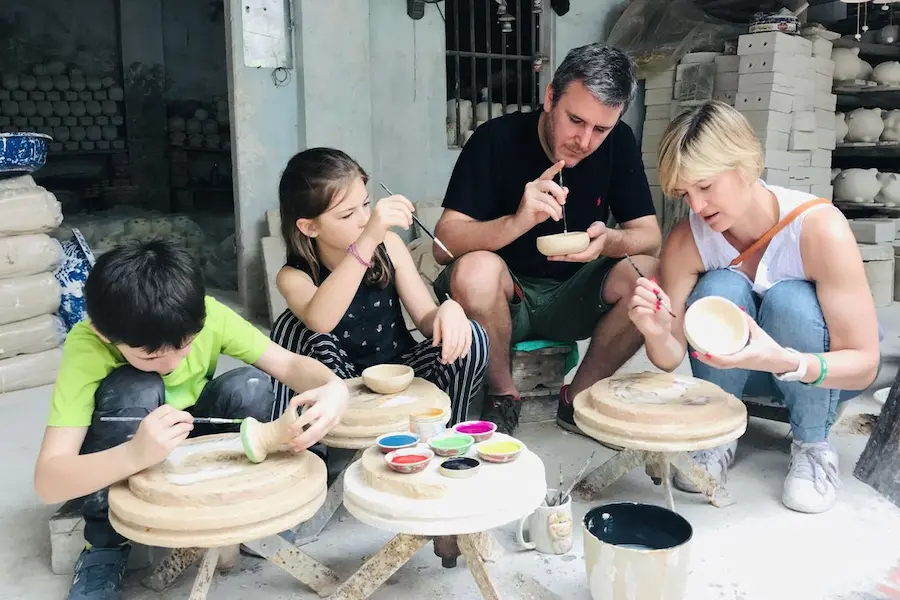
Bat Trang is the practical starting point for many travelers. It is close to Hanoi, with workshops, a ceramics market and a museum that can help you understand the wider craft before or after a hands-on session. Vietnam’s official tourism site suggests joining a pottery workshop on a visit to the village.
Our recommendation for pottery making in Vietnam here is to give the studio time. Watch how the artisan centers and shapes the clay; then try it yourself, rather than moving immediately to the market. A private guide can explain what is particular to Bat Trang and help you separate a genuine studio visit from a quick shopping stop.
Our Wondrous Vietnam Family Tour already includes Bat Trang on its Hanoi day, with an optional chance to make a simple ceramic piece. That published day combines several other Hanoi activities and an evening train. If pottery making in Vietnam is a highlight for your family, we would adjust the day rather than assume a longer workshop fits without changing anything else.
For travelers wanting to combine crafts, the Bat Trang–Dong Ho–Dong Ky village tour includes a Bat Trang workshop stop before continuing to traditional printmaking and woodwork. Its pottery activity is listed at the guest’s own expense, so confirm the workshop and any fee when enquiring.
Thanh Ha when you are staying in Hoi An
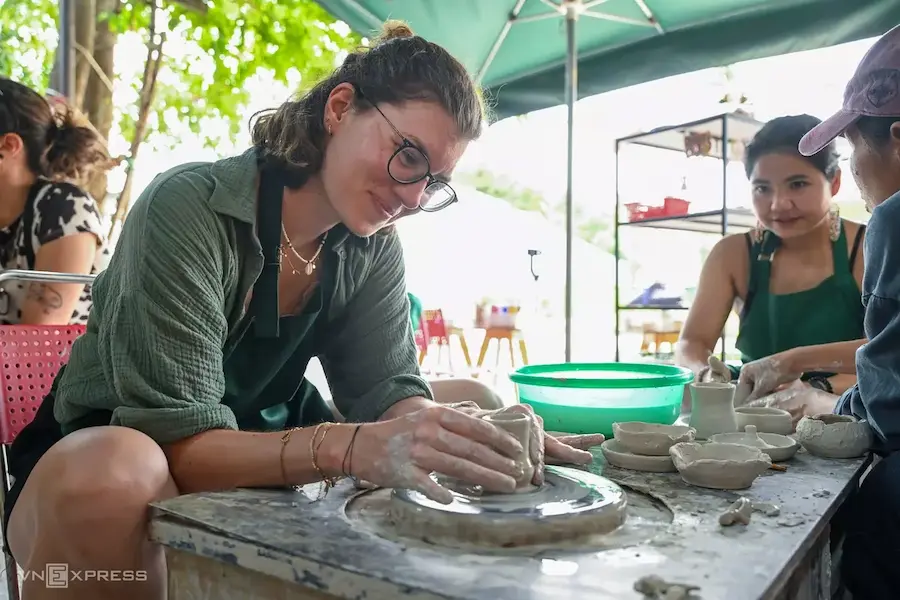
Thanh Ha is a good choice if Hanoi is already full or your family prefers a quieter craft stop during time in Hoi An. The village has working pottery spaces where artisans demonstrate their techniques, and visitors can find opportunities to try making a piece. Hoi An’s heritage authority describes visitors exploring the production points, making their own products and seeing the kilns.
For pottery making in Vietnam, the advantage here is the fit with an existing Hoi An stay. You can pair a village visit with a morning in the ancient town, allowing enough time for a demonstration and your own turn with the clay. Ask whether the visit involves a specific host or simply free time to explore; they are different ways to spend the afternoon.
Our Hoi An Ancient Town Discovery Tour includes Thanh Ha after a boat trip. The published itinerary describes watching potters at work. Travelers booking pottery making in Vietnam as a hands-on experience should request that addition when we customize the day; it is not listed as a standard inclusion in that tour.
Bau Truc when the Chăm craft tradition is part of your route
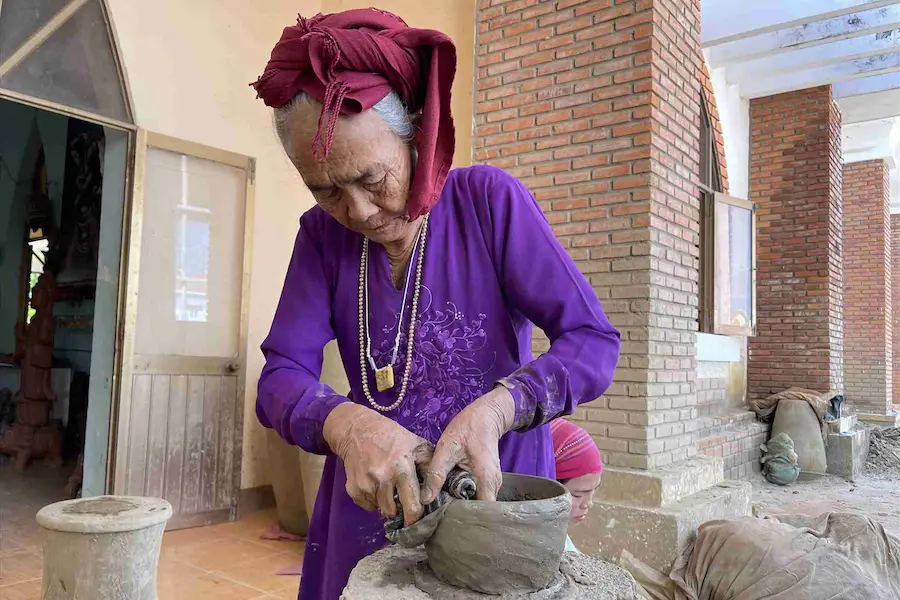
At Bau Truc, the interest is as much in how pottery is made as in the finished object. Artisans in the Chăm tradition shape clay by hand with simple tools rather than relying on a potter’s wheel. Vietnam’s official tourism site describes the process and visitor opportunities to try it with local guidance.
UNESCO added the art of pottery-making of the Chăm people to its List of Intangible Cultural Heritage in Need of Urgent Safeguarding in 2022. This gives pottery making in Vietnam an important cultural dimension beyond the activity itself. The recognition concerns the living practice; it does not mean every visit to Bau Truc comes with a workshop. See UNESCO’s record.
If you are interested in pottery making in Vietnam beyond the better-known Hanoi and Hoi An sessions, Bau Truc can add a different perspective. Make space to listen to the artisan before trying to imitate the technique. We would arrange the host and activity first, then fit the stop into a south-central route. Our Phan Rang cultural excursion includes Bau Truc as a village visit; its current listing is designed for guests staying at Amanoi, and it does not promise a pottery class.
How to plan a workshop that actually fits your day
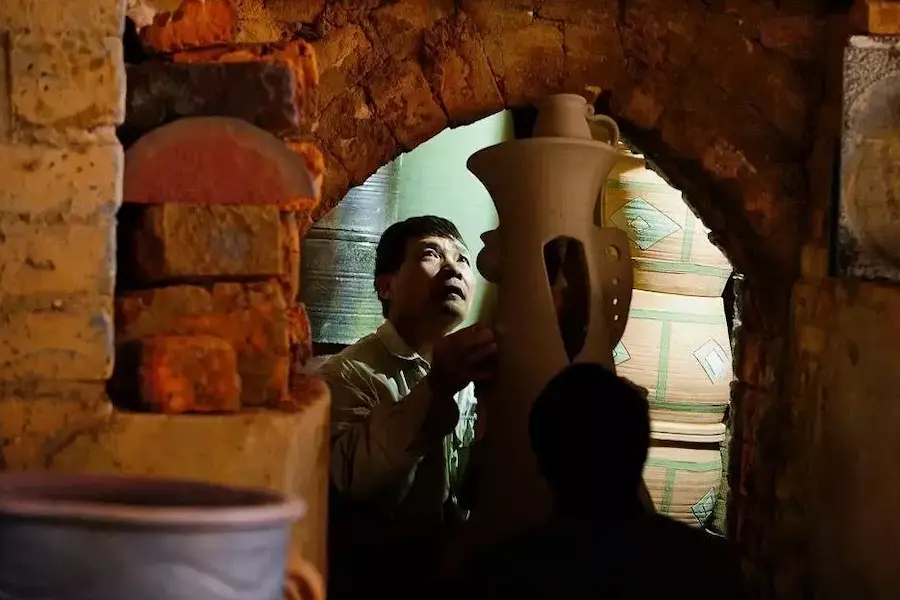
The most common planning mistake is to treat pottery making in Vietnam as a five-minute addition to a packed sightseeing day. A village can be close to a major destination while the experience itself still needs room for travel, meeting the artisan, the activity and a relaxed return. We use these three checks before recommending a stop:
Choose the place you will already be near. If Hanoi is your only northern base, Bat Trang usually fits more naturally than a separate journey to a specialist village. If Hoi An is on your itinerary, Thanh Ha is the easier addition. Bau Truc makes sense when your route genuinely passes through the Phan Rang area.
Decide what your party wants to do. A couple who enjoys design may prefer watching a maker discuss glazing and form. A family might want every person to shape or decorate a small item. Your version of pottery making in Vietnam should be specified rather than assumed from the phrase pottery village visit.
Build in a pause, especially with children. Clay work can be messy, and crowded schedules make even an enjoyable activity feel hurried. Put the workshop at a comfortable point in the day, ask about wash-up facilities and footwear, and check any age guidance with the particular studio.
Those details are what turn pottery making in Vietnam into an experience tailored to the travelers, rather than one more attraction checked off a list.
Six questions to ask before booking
When a tour description says “visit a pottery village,” ask these questions if pottery making in Vietnam is a reason you are booking it:
- Will we meet an artisan at a working studio, or just browse the village and market?
- Will each guest shape clay, decorate a prepared item, or watch a demonstration?
- Is the activity included in the tour price, and is there a separate fee for firing or shipping?
- How much time is reserved for the session, and can it be adapted for children or beginners?
- What happens to the piece afterward, and when could it realistically be collected?
- Can we take photographs inside the workshop, and are there times when we should put the camera away?
An honest answer may be that a particular day only allows an introduction and a demonstration. That can still be the right choice. It is better to know before you arrive.
Pottery making in Vietnam with children and first-time visitors
You do not need artistic talent to enjoy a first session. The most useful outcome is often a better appreciation of the maker’s skill, not a perfectly symmetrical bowl. For families, agree on a simple activity that suits the children’s ages and attention spans, and let the guide know if anyone prefers to observe.
Adults may enjoy the same slower pace. Ask why a vessel is shaped for a particular use, where the clay comes from, or how the studio distinguishes pieces that are ready for the kiln. These questions turn pottery making in Vietnam into a conversation with the craftsperson rather than just a photograph of your hands on a wheel.
Respect the working space. Follow the host’s instructions, keep clear of hot or restricted areas, and ask before photographing makers or family members. If you want a souvenir, buying from the workshop supports the person whose skills made the visit possible.
Frequently asked questions
Can I bring home what I make?
Sometimes, but never assume it. Depending on what you make, drying, glazing and firing may take longer than your stay. When booking pottery making in Vietnam, ask the workshop whether collection or shipping is possible, or choose a finished piece to take with you.
Is a pottery village visit the same as a class?
No. A visit may focus on local history, a demonstration and shopping. A class gives you dedicated time and instruction to shape or decorate something. For pottery making in Vietnam, check which format the tour actually reserves.
Is Bat Trang or Thanh Ha better for beginners?
Both can work. Bat Trang is convenient during a Hanoi stay and appears in several Vietnam Tour Biz itineraries. Thanh Ha is a natural fit for Hoi An. The right choice is the one near your existing route with an available workshop suited to your group.
Should we also go to Chu Dau or Phu Lang?
Consider them if your party has a strong interest in ceramics and time for a separate northern craft excursion. Do not add them solely to increase the number of pottery villages on your itinerary. Confirm a working host and the activity beforehand, especially if you expect to take part rather than observe.
Add a craft experience to your Vietnam itinerary
Good pottery making in Vietnam starts with a simple request: tell us where you will be, who is traveling and whether you want to watch, shape or decorate. Explore our Vietnam family tours or the specific Bat Trang and Hoi An itineraries above, then contact our vietnam local tour operator to arrange a private trip with the right workshop and a pace that suits you.