
If you happen to find yourself wandering the streets of Hanoi or Saigon during the days leading up to Tet (the Vietnamese Lunar New Year), you will feel it: a sudden, electric shift in the air. The usual frantic traffic gives way to a sea of peach blossoms and kumquat trees being transported on motorbikes. But more importantly, the air starts to smell like ginger, sticky rice, and woodsmoke.
For us Vietnamese, Tet is more than just a calendar flip. It’s a spiritual reset. And in our culture, “Belief” isn’t just something you hold in your heart—it’s something you put on your plate. We believe that what you eat in the first three days of the year sets the tone for the next 365 days.
If you’re traveling here, you aren’t just a tourist; you’re a guest at our nation’s biggest dinner party. To help you navigate the table, here is the “spiritual menu” of 15 foods that we believe bring luck, wealth, and health.
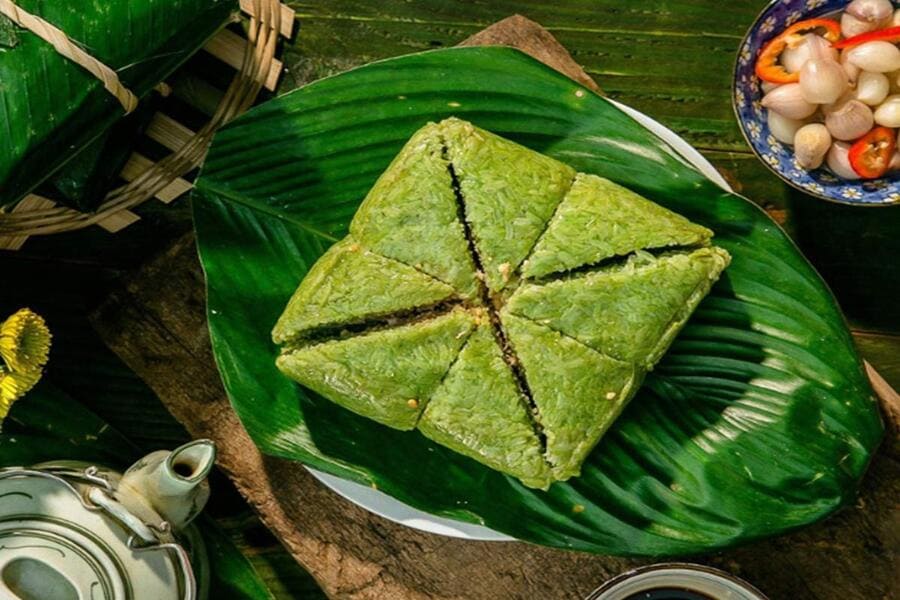
1. Banh Chung & Banh Tet (The Square & Round Rice Cakes)
The Meaning: Gratitude and the Harmony of the Universe
You cannot have Tet without Banh Chung. Imagine a dense, green parcel wrapped in dong leaves. Inside, layers of glutinous rice, creamy mung bean, and fatty pork belly are steamed for over 12 hours.
But why is it lucky? Legend has it that a young prince created these cakes to represent the Earth (the square Banh Chung) and the Sky (the cylindrical Banh Tet). Eating this is our way of showing gratitude to our ancestors and the land that feeds us. When you bite into that rich, sticky texture, you’re tasting thousands of years of agricultural history. It’s a symbol of solidity and protection—a wish for a year as stable as the earth itself.
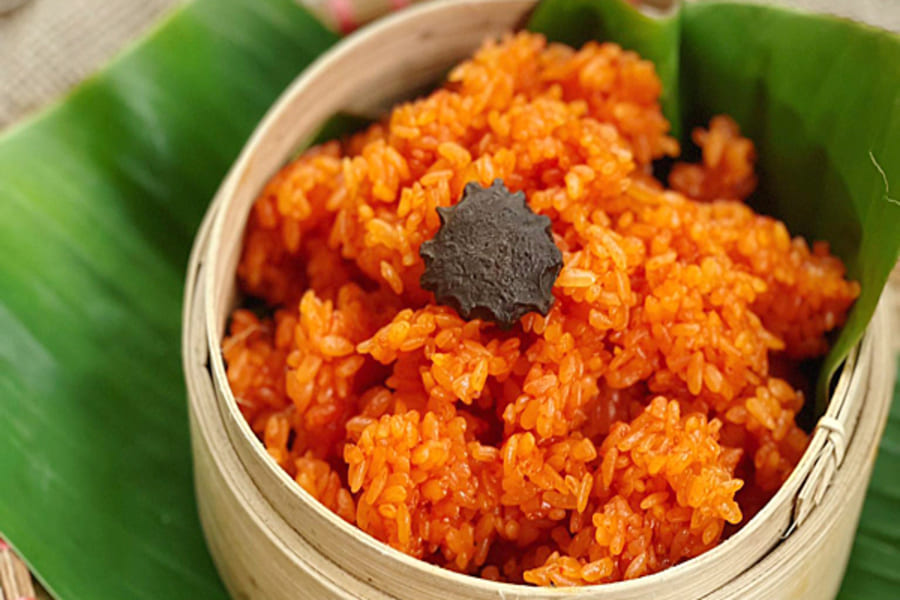
2. Xoi Gac (Red Sticky Rice)
The Meaning: Absolute Good Fortune
In Western culture, red might mean “stop” or “danger.” In Vietnam, red is the color of pure joy, luck, and blooming life. Xoi Gac gets its vibrant, crimson hue naturally from the “Baby Jackfruit” (Gac).
We serve this at every wedding and New Year’s table because the color is believed to attract good spirits and ward off “bad luck.” For a traveler, seeing a plate of Xoi Gac is a visual blessing. It’s the “lucky charm” of the culinary world. Pro-tip: the stickier the rice, the more “tight-knit” your family and friendships will be in the coming year!
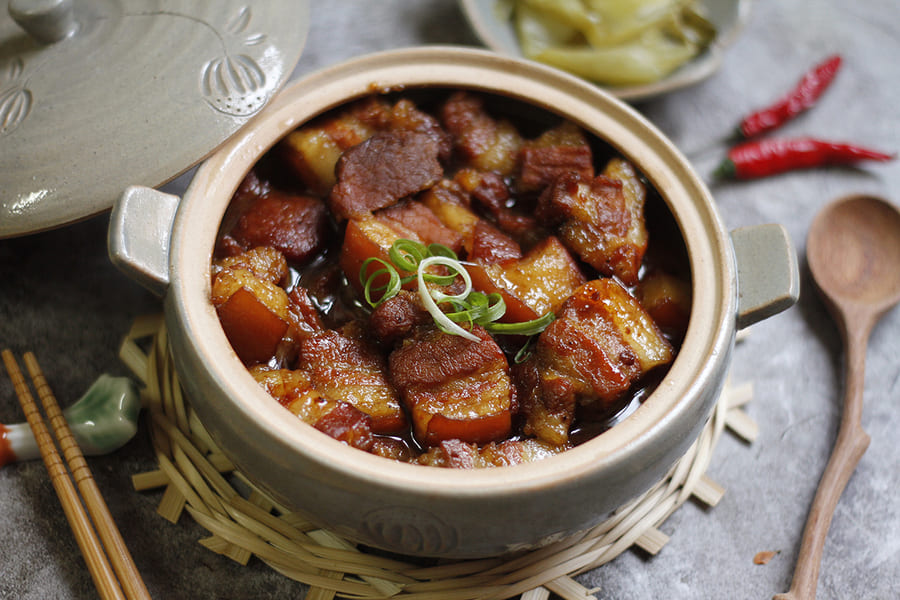
3. Thit Kho Tau (Braised Pork with Eggs)
The Meaning: Wholeness and Domestic Harmony
This is the ultimate comfort food. It’s a pot of tender pork belly simmered in coconut water, but the real stars are the hard-boiled eggs.
Why eggs? In our belief, the round shape of the egg represents “Vien Man”—a state of being “full and complete.” We don’t cut the eggs; we leave them whole to symbolize a year where nothing is broken and no one is left behind. The savory-sweet broth represents the balance of life’s flavors. It’s a humble reminder that a lucky life is one that is harmonious and well-rounded.
4. Canh Kho Qua (Bitter Melon Soup)
The Meaning: Leaving the Hardships Behind
This is perhaps the most poetic dish on the menu. The name of the melon, Kho Qua, is a beautiful linguistic pun. In Vietnamese, “Kho” means suffering or hardship, and “Qua” means to pass or overcome.
By eating this slightly bitter soup, we are literally “eating our troubles away.” It’s a symbolic way of saying, “May the bitterness of the past year end here, and may the sweetness of the future begin.” It’s a refreshing palate cleanser and a psychological “refresh” button for the soul.
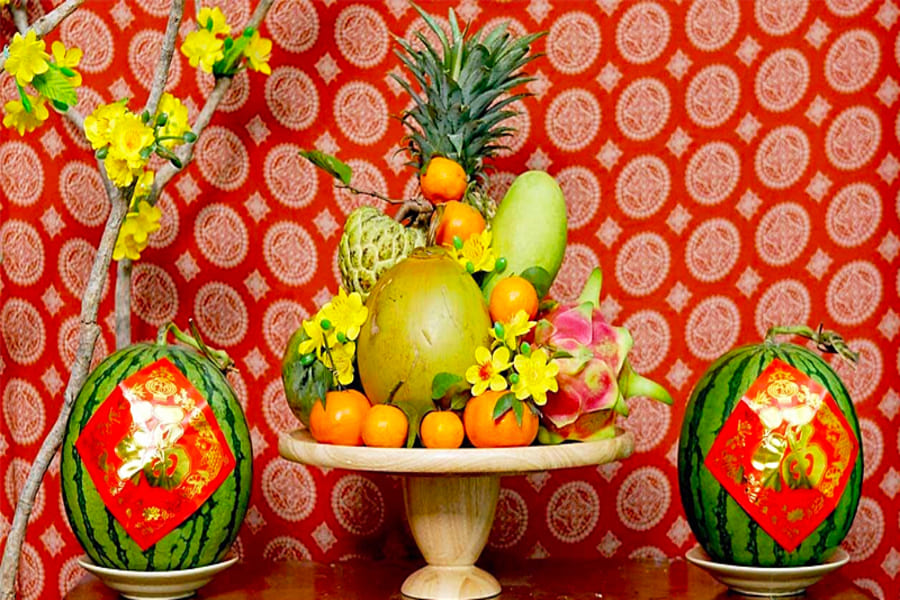
5. The Five-Fruit Tray (Mam Ngu Qua)
The Meaning: A Harvest of Five Blessings
Walk into any Vietnamese home during Tet, and the altar will be crowned with a vibrant Five-Fruit Tray. This isn’t just a centerpiece; it’s a visual prayer. In Eastern philosophy, the number five represents the five elements (Metal, Wood, Water, Fire, Earth) and the five blessings: Wealth, Luxury, Long Life, Health, and Peace.
In Southern Vietnam, we love a good linguistic pun. We often choose Custard Apple (Cau), Coconut (Dua), Papaya (Du), and Mango (Xoai). When spoken in the Southern dialect, they sound like: “Cau Vua Du Xai”—which literally translates to “Praying for just enough to spend (and live comfortably).” It’s a humble yet profound Vietnamese Tet tradition that reflects our practical yet optimistic soul.
6. Mut Tet (Candied Fruits)
The Meaning: Sweetness in Every Connection
If you are exploring the local markets with [vietnam local tour operators], you’ll see infinite boxes of colorful Mut Tet. These candied treats—made from ginger, coconut, lotus seeds, and kumquats—are more than just snacks.
Each flavor carries a wish. Candied ginger is for warmth and health; lotus seeds represent “con đàn cháu đống” (fecundity and a big, happy family). We serve these to guests because we believe that starting the year with sweetness ensures that all our conversations and relationships in the coming year will be smooth and “sweet.”
7. Watermelon (Dua Hau)
The Meaning: Inner Sincerity and Hidden Luck
The watermelon is the “King of Tet Fruits.” Why? Because of its colors. The green rind represents the earth, while the hidden red flesh symbolizes a heart full of sincerity and good fortune.
We often carve the word “Phuc” (Happiness) or “Loc” (Wealth) onto the skin. It’s a reminder that true luck often lies beneath the surface, waiting to be discovered. If the melon is exceptionally red and sweet when cracked open on New Year’s Day, it’s a sign that your family will have an incredibly prosperous year.
8. Boiled Chicken (Ga Luoc)
The Meaning: A Smooth and Bright Beginning
A whole boiled chicken is a staple on the ancestral altar. We look for a bird with bright yellow skin (the color of gold) and a straight posture. In our spiritual cuisine, the chicken symbolizes a “bright start.”
The golden skin isn’t just for appetite; it represents a wish for “Gilded Wealth.” We believe that by offering a perfect chicken to our ancestors, we are asking for a year where every door opens easily and every plan goes exactly as intended.
9. Fried Spring Rolls (Nem Ran / Cha Gio)
The Meaning: Nuggets of Gold
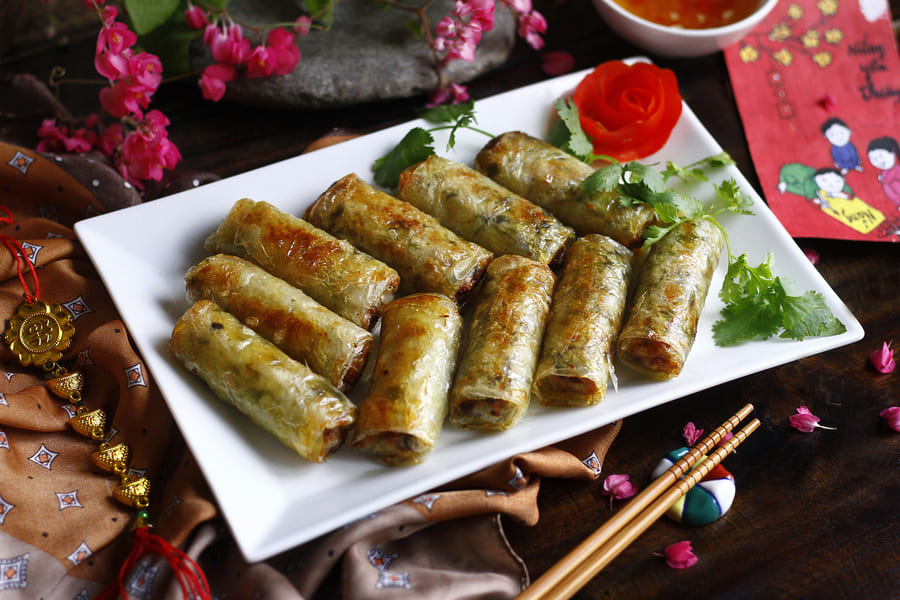
To a traveler, they are delicious crispy rolls. To a local during Tet, they are “Gold Bars.” Their golden-brown, crispy exterior resembles small bars of bullion. Serving a large plate of Spring Rolls is like laying out a tray of wealth for your family. It’s a dish that signifies abundance—the more you have, the wealthier your “treasure chest” will be this year.
10. Long Noodles (Mi Truong Tho)
The Meaning: The Gift of Time
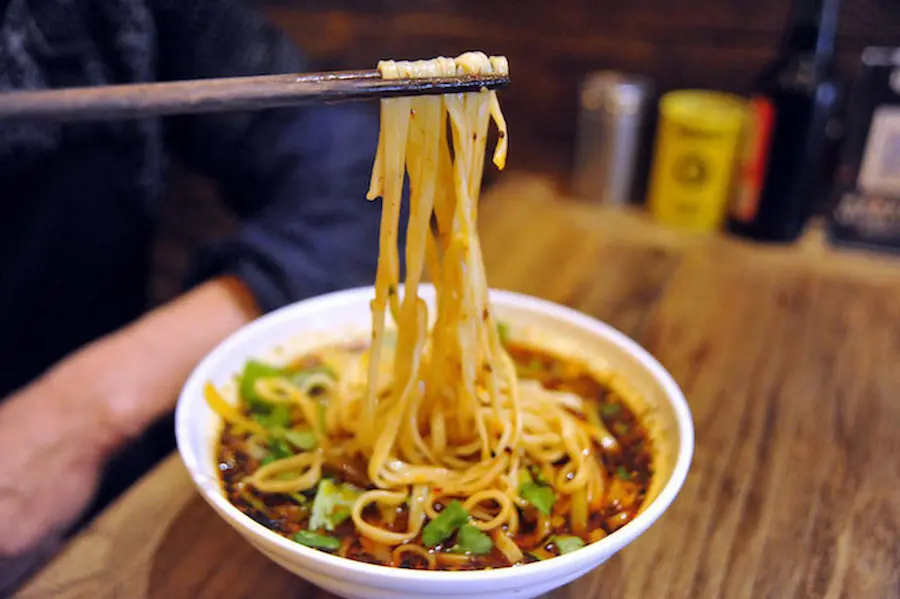
Influenced by broader Asian beliefs, many Vietnamese families include a noodle dish during the New Year. The key rule? Don’t cut the noodles. The length of the noodle represents the length of your life. Long, unbroken noodles are a wish for longevity and health for the elders in the family. It’s a beautiful way to honor the “roots” of our family tree.
11. Fried Fish (Ca Chien)
The Meaning: Everlasting Abundance
In the Sino-Vietnamese language, the word for “Fish” (Yu) sounds exactly like the word for “Surplus.” Therefore, eating fish at the end of the year or the beginning of the new one is a strategic move to ensure you always have more than you need. We usually serve the fish whole to signify a good beginning and a good end.
12. Papaya (Du Du)
The Meaning: The Luxury of “Enough”
While some cultures strive for “more, more, more,” Vietnamese culture deeply values the concept of “Du” (Sufficiency). The name for papaya in Vietnamese is Du Du, which literally means “enough and more than enough.” It represents a life free from the stress of lack—a peaceful, stable existence where all your needs are met.
13. Mango (Xoai)
The Meaning: Wisdom in Spending
As mentioned in the Five-Fruit Tray, the Mango (Xoai) is a favorite. It represents the “Spending” (Xai) part of the wealth equation. In our culture, it’s not just about earning money; it’s about having the “luck” to spend it on things that bring joy and meaning.
14. Dumplings (Sui Cao)
The Meaning: Wealth Wrapped in Love
Common in the northern regions and within the Chinese-Vietnamese communities, dumplings are shaped like ancient silver ingots. Making them is a family affair—folding the dough is like “wrapping up the luck” so it doesn’t escape. Each bite is a delicious prayer for financial success.
15. Roasted Seeds (Hat Dua / Hat Huong Duong)
The Meaning: Sowing the Seeds of the Future
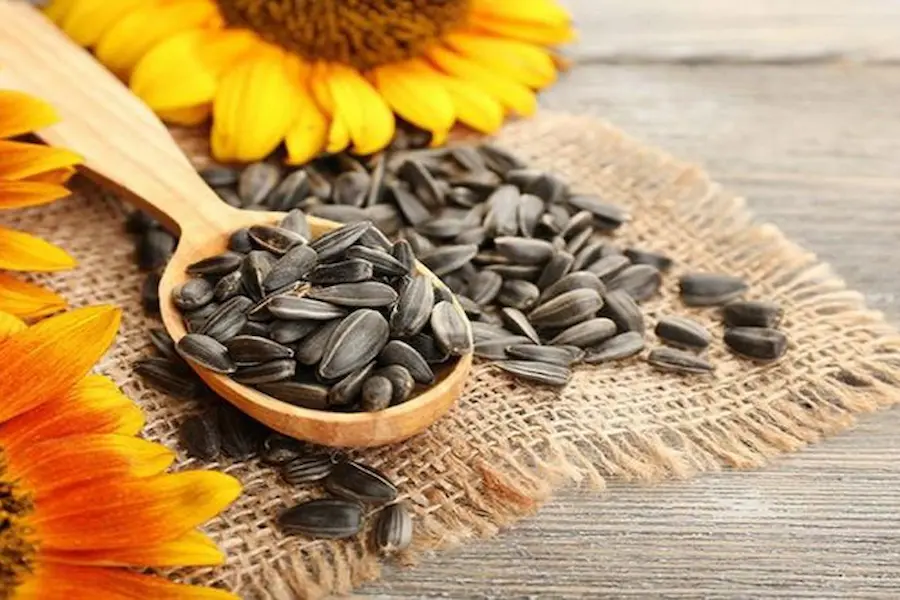
Finally, no Tet visit is complete without the rhythmic “click-clack” of cracking seeds. Red melon seeds (Hat Dua) are the most popular. Cracking these seeds is a symbolic act of “opening up” new opportunities. The sound adds to the “Nao Nhiet” (vibrant and noisy) atmosphere that we believe scares away bad spirits and invites a lively, energetic new year.
Conclusion: More Than Just a Meal
Understanding the Vietnamese Tet traditions through food is the quickest way to the heart of our culture. Every ingredient, every color, and every name is a thread in a larger tapestry of hope. When you sit down for a meal during Tet, you aren’t just eating; you are participating in a 4,000-year-old ritual of optimism.
Whether you are looking for prosperity, longevity, or simply a sweet start to your travels, the flavors of Vietnam are ready to bless you. To truly immerse yourself in these “Lucky Foods” and hear the stories from the locals themselves, we highly recommend connecting with experienced vietnam local tour operators. They can guide you past the tourist traps and into the warm, fragrant kitchens where the real magic of Tet happens.
Chuc Mung Nam Moi – May your year be as vibrant as Xoi Gac and as sweet as Mut Tet